What Every Antiparasitic Medication You’ve Taken May Have Left Behind



The symptoms came back. Every time. On schedule.
For more than a year, I kept seeing the same sequence in patients who had already completed Ivermectin, Albendazole, or Metronidazole. The medication worked. Bloating eased. Energy returned. Urgency settled. For a short period, they believed the problem had finally been resolved.
Then the symptoms came back.
The timing was what troubled me. In case after case, the same discomfort returned within two to five weeks. Many patients followed the instructions exactly, changed their diets, and completed every dose.
Their doctors called it reinfection and prescribed another round. Yet the recurrence happened on a schedule that was too consistent to dismiss as a new exposure each time. I was trying to explain why obvious temporary relief still failed to stop the pattern from repeating.

It was not reinfection.
I began reviewing the cases by timeline rather than by brand. Ivermectin, Albendazole, and Metronidazole had each produced temporary improvement in different patients. Something was being reduced. The unanswered question was what remained after that first improvement.
Reinfection was possible, but it did not explain the regularity. Parasites progress through different stages, and a compound that affects one stage may have little effect on another. The prescriptions may have reduced the active stage while leaving a protected stage untouched long enough to restart the process.
The issue was no longer whether the prescription had been strong enough. The question became: what if the prescription was never capable of reaching the stage that was carrying the cycle forward?
The stage every prescription missed.
Intestinal parasites exist in three stages simultaneously. Fully developed adults live along the surface of the intestinal lining. Larvae develop in surrounding tissue. Eggs remain sealed inside the intestinal wall behind a lipid-based outer shell until their biological schedule advances.
Every prescription ever written addresses the adult stage. The adults are reduced, symptoms ease, and the result feels convincing. But the eggs remain. They hatch on their own schedule, larvae develop, and new adults mature within weeks. Not Ivermectin. Not Albendazole. Not Metronidazole. Not any herbal cleanse the patient had already bought.
Relief did not prove the entire lifecycle had been cleared. It proved that one active stage was affected. The problem was not insufficient strength. It was structural inability to reach the stage that remained behind.
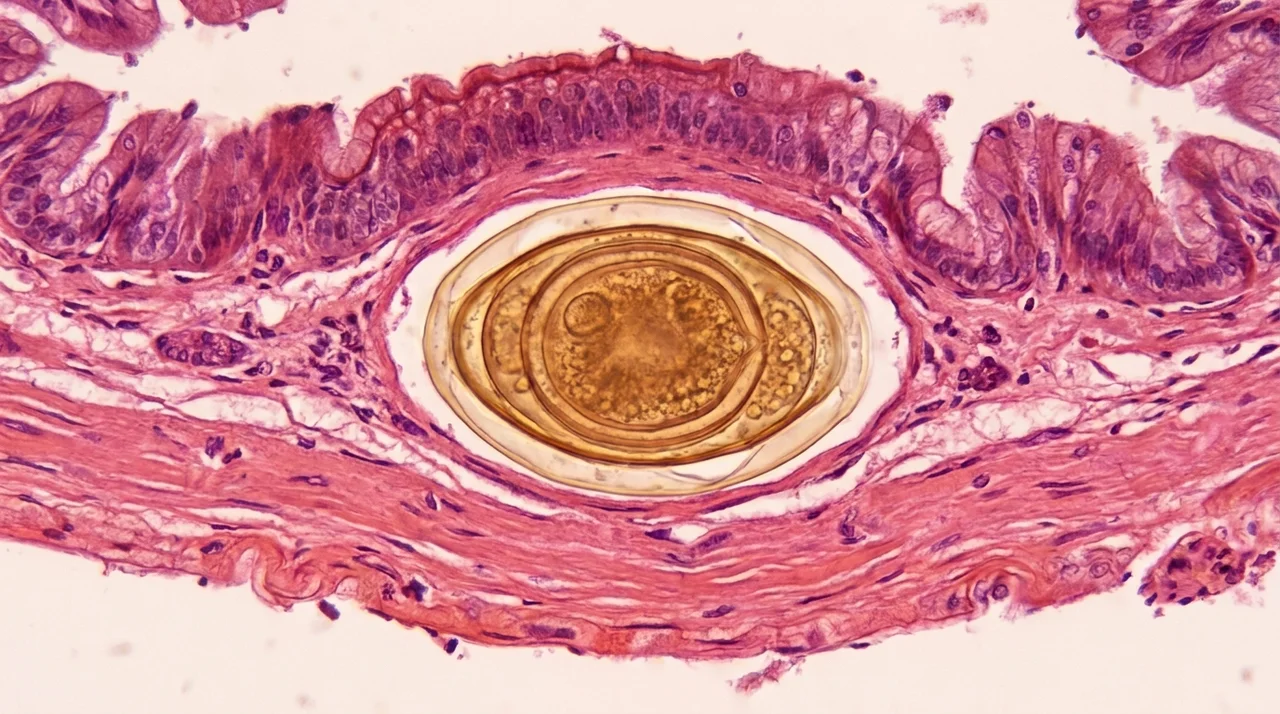
Mucosal biopsy sample. Parasite egg embedded in intestinal wall tissue four months post-treatment. The lipid-based outer shell visible at center is the stage no prescription antiparasitic is formulated to cross.
The molecule with a different chemistry.
The research trail eventually led me to Eugenol, a phytochemical fraction found in raw clove. Its importance is not that it comes from an herb. Its importance is its molecular solubility.
Eugenol is lipid-soluble. Parasite eggs are protected by a lipid-based outer shell. Ivermectin, Albendazole, Metronidazole, and familiar herbal compounds are water-soluble. They can reach the shell, but their chemistry does not match the barrier in the way a lipid-soluble compound does.
The grocery-store objection is reasonable, but raw clove is not a measured therapeutic extract. Food-level clove does not provide a controlled amount of Eugenol, while consuming enough concentrated clove to chase a meaningful dose can create liver-safety concerns. The raw ingredient and the extracted compound are not the same thing.
A complete mechanism has to connect the barrier, the compound, and the manufacturing method.
Most manufacturers destroy it before it ships.
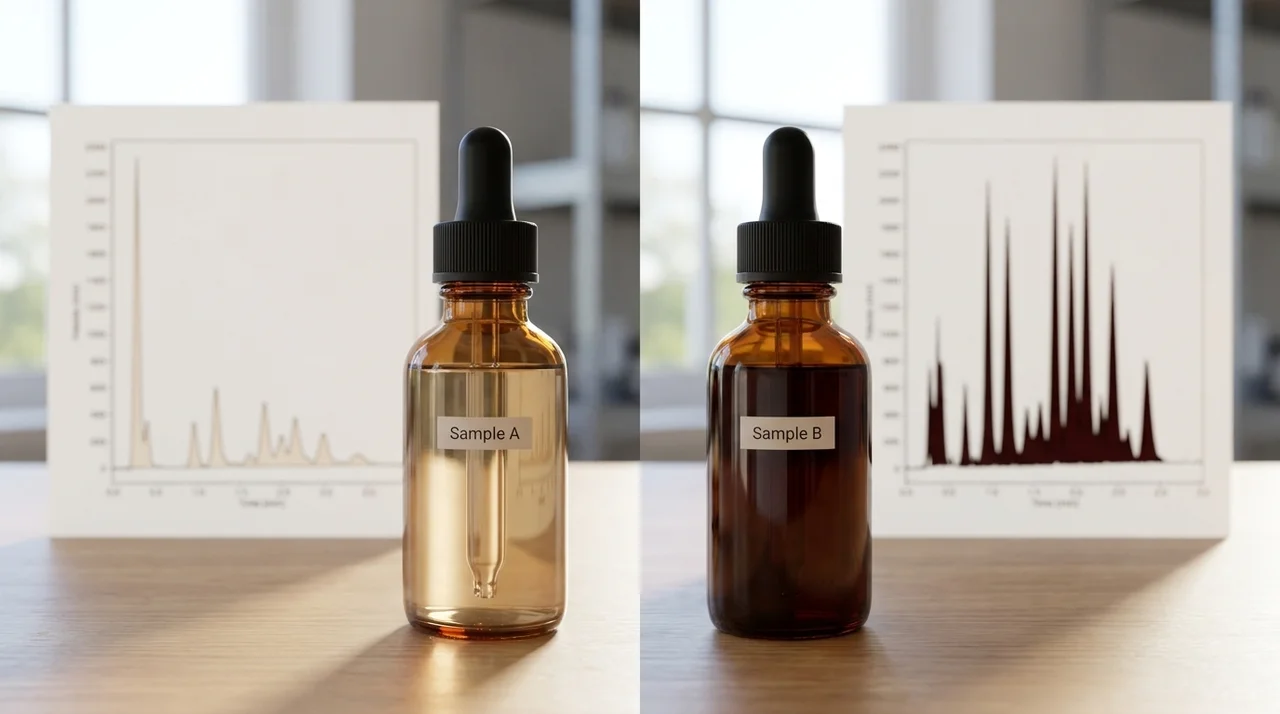
Finding the molecule did not solve the commercial problem. Nearly every supplement manufacturer uses high-heat extraction because it shortens production time, increases batch volume, and improves margins. That process can alter the Eugenol fraction before a clove formula reaches the shelf.
This is not negligence. It is economics.
Cold-pressing uses slow mechanical extraction at low temperature. It requires more expensive equipment, produces smaller batches, and creates less inventory from each production cycle. The manufacturer accepts higher costs and worse margins in exchange for preserving the fraction the formula depends on.
Two products can list the same ingredient while delivering different finished chemical profiles. Almost no manufacturer commits to the slower method because the economics work against scale. This is why you have never encountered this in anything you have tried before.
This is not a stronger cleanse claim.
The argument does not depend on claiming ParaCycle is stronger. It connects a protected stage, a compatible compound, and a process designed to preserve that compound.
The stage earlier approaches left behind
Adults can be reduced while eggs remain sealed behind a lipid-based shell. When those eggs hatch and new adults mature, the familiar return can look like reinfection even though no new exposure was required.
The compound matched to the barrier
Eugenol is lipid-soluble. Its relevance is chemical, not botanical branding. The mechanism depends on preserving a compound whose properties differ from the water-soluble approaches used before.
A delivery routine designed for consistency
ParaCycle uses two drops under the tongue each morning. The routine is simple enough to complete and does not rely entirely on gastrointestinal passage for delivery.
The sources behind the claim.
The investigation connects parasite lifecycle staging, Eugenol chemistry, extraction conditions, and oral-mucosal delivery rather than asking the reader to accept a stronger-cleanse claim.

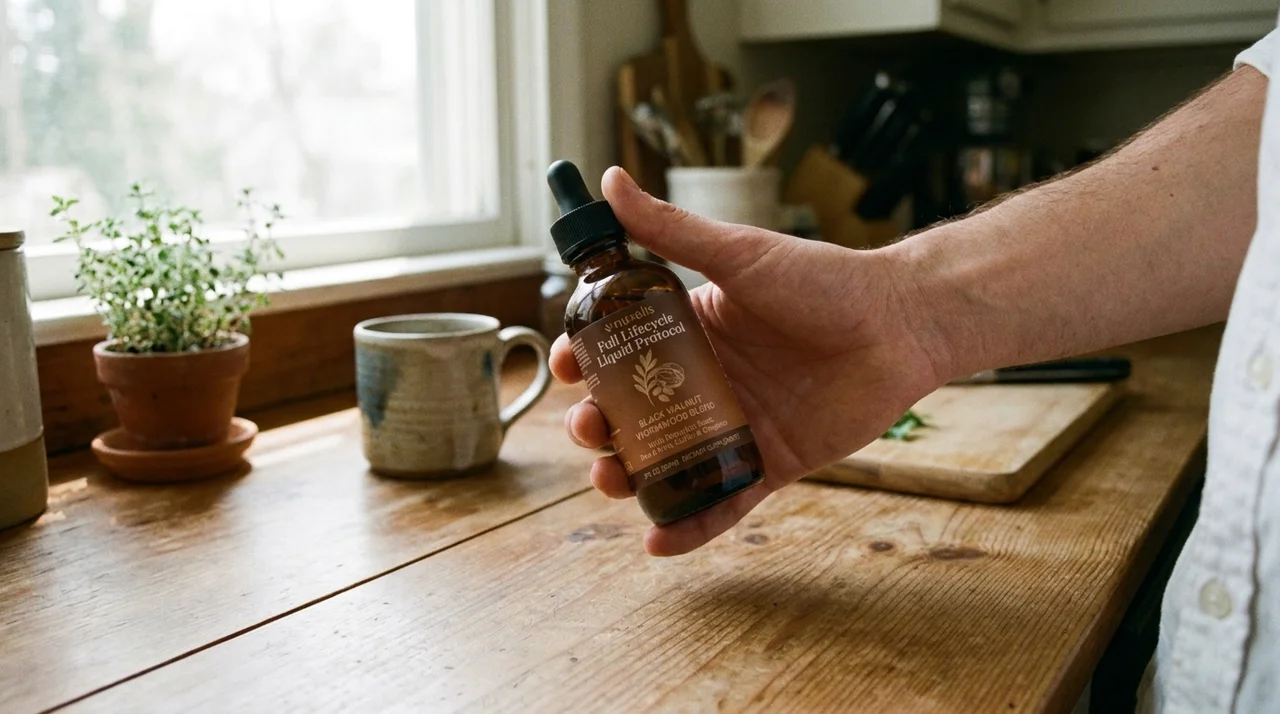
ParaCycle Cold-Pressed Liquid Protocol
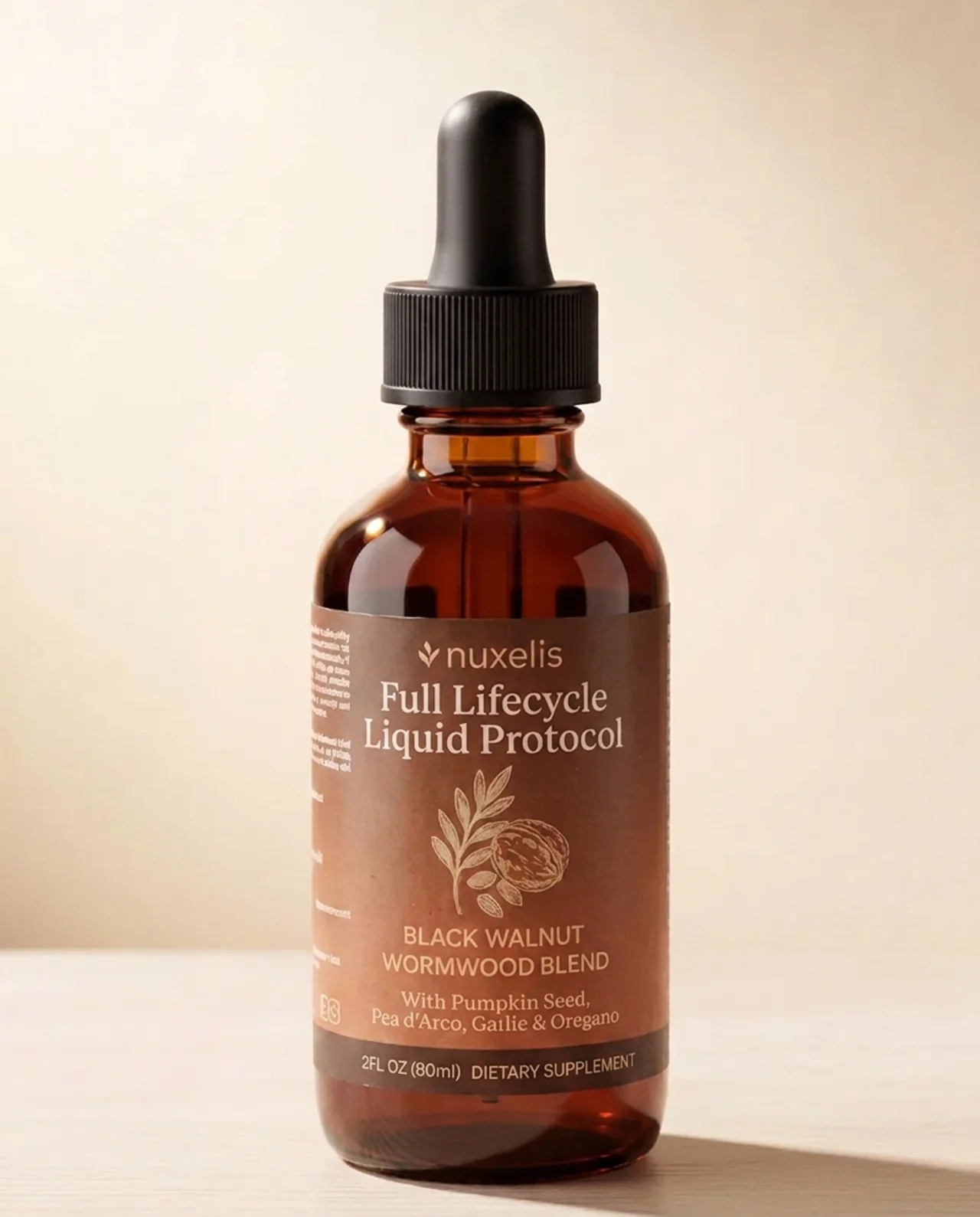
ParaCycle combines a cold-pressed Eugenol-rich clove extract with wormwood and black walnut hull in one liquid routine. The formula is organized around the protected egg stage and fully developed adults rather than presented as another generic herbal blend.
- Cold-pressed Eugenol-rich clove extract
- Wormwood and black walnut hull
- Two drops under the tongue each morning
- 60-day money-back guarantee, empty bottle included
What stopped happening in my own patients.
When I introduced ParaCycle to my own patients, I observed something different from anything a completed prescription had produced.
The familiar two-to-five-week return pattern stopped appearing with the same regularity. The change was not immediate drama. It was the absence of the expected relapse.
The accounts below matter because each person’s reference point was not a supplement that disappointed them. It was a prescription that helped temporarily, then failed again on a predictable schedule.
Three people. Three different paths. Same result.
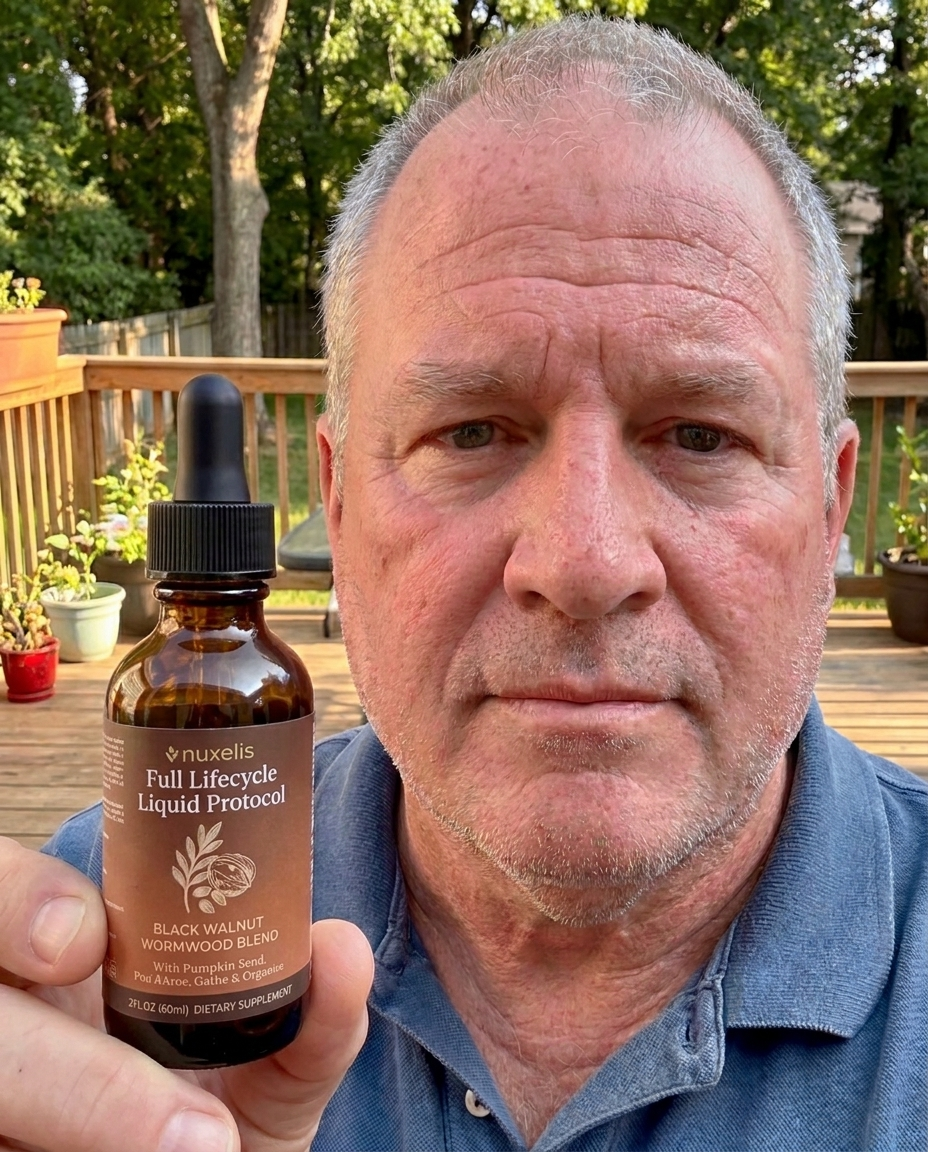
Years of private self-treatment and no prescription history
I never asked a doctor about it. I was the front-desk secretary at an elementary school in a small town, and the clinic receptionist was the mother of one of our students. The thought of describing the symptoms to someone I saw at pickup every afternoon was unbearable. For almost four years I rotated raw garlic, pumpkin seeds, and food-grade diatomaceous earth whenever the bloating and nighttime discomfort returned.
I finally tried ParaCycle after finding an old notebook with the same cycle recorded nine separate times. The first change I noticed was that I stopped preparing for the usual return date. By week eight, the heating pad I had kept hidden behind the towels in my linen closet was still untouched.
Seven years of IBS treatment without a parasite-specific prescription
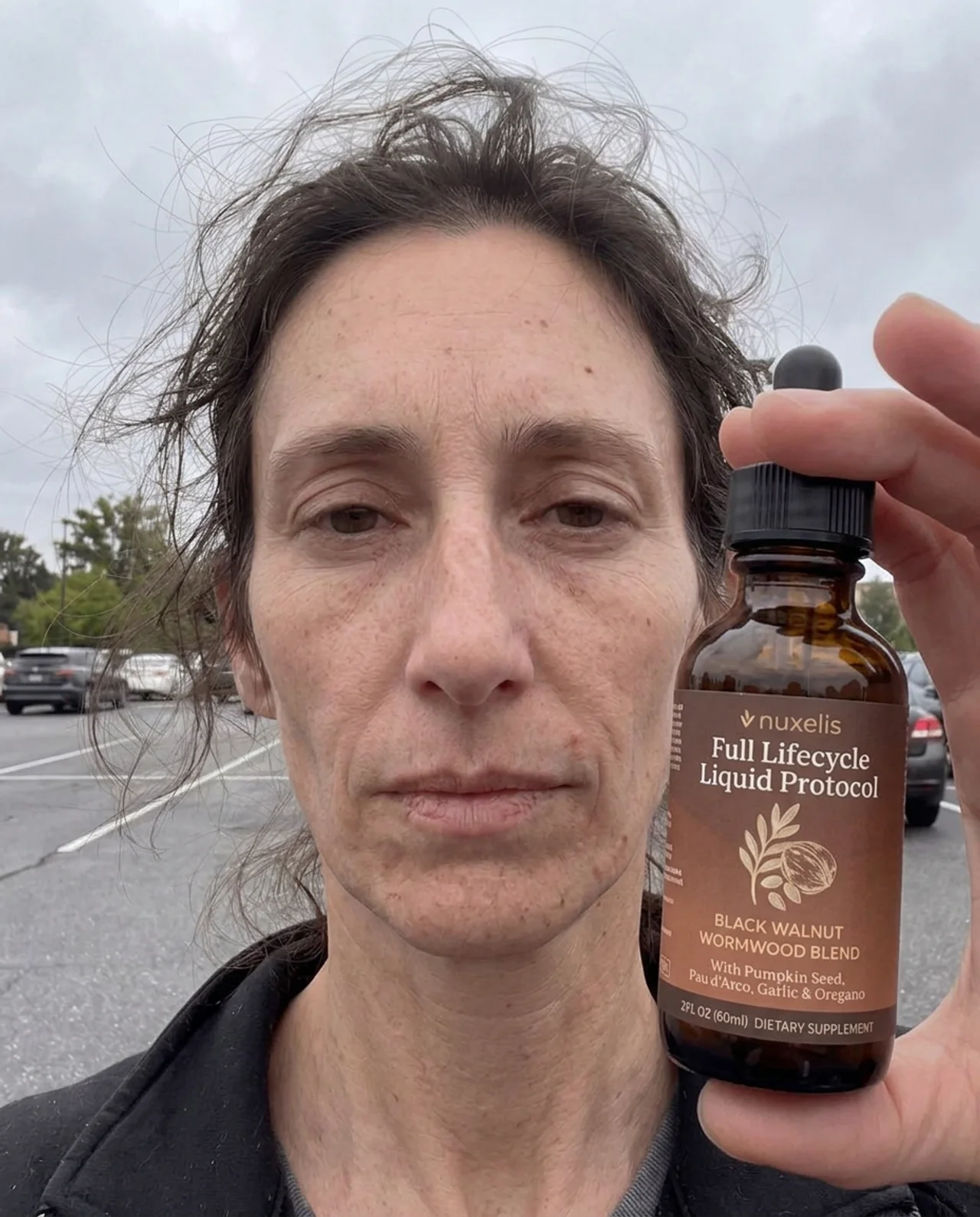
My chart said IBS-D, so every appointment stayed inside that diagnosis. I was given dicyclomine, then low-dose amitriptyline, while peppermint capsules, soluble fiber, and probiotic sachets became my routine between visits. No one prescribed a parasite-specific medication. The symptoms kept returning, and each return was treated as another IBS flare.
The breaking point came when I rescheduled my daughter's graduation dinner around the same digestive pattern I had been planning around for years. I started ParaCycle because the lifecycle explanation addressed a possibility my diagnosis never had. Ten weeks later, I drove the familiar route to my mother's house without stopping at the gas station whose restroom code I had memorized.
A literature search between every pharmaceutical course
I approached the problem like a research project. I read the papers, saved the DOIs, and tracked each course in a spreadsheet. Nitazoxanide came first, followed by praziquantel and then tinidazole. Between courses I tested berberine, a neem tincture, and activated charcoal while comparing mechanisms and relapse intervals. Improvement appeared each time, but the timing of the return stayed remarkably consistent.
ParaCycle entered my notes only after I compared the proposed egg-stage mechanism with the chemistry of eugenol and the manufacturing method used to preserve it. I expected to record another relapse date. At week twelve, the spreadsheet cell reserved for that date was still blank, and that empty cell was the detail that mattered most to me.
Here is what the formula includes.
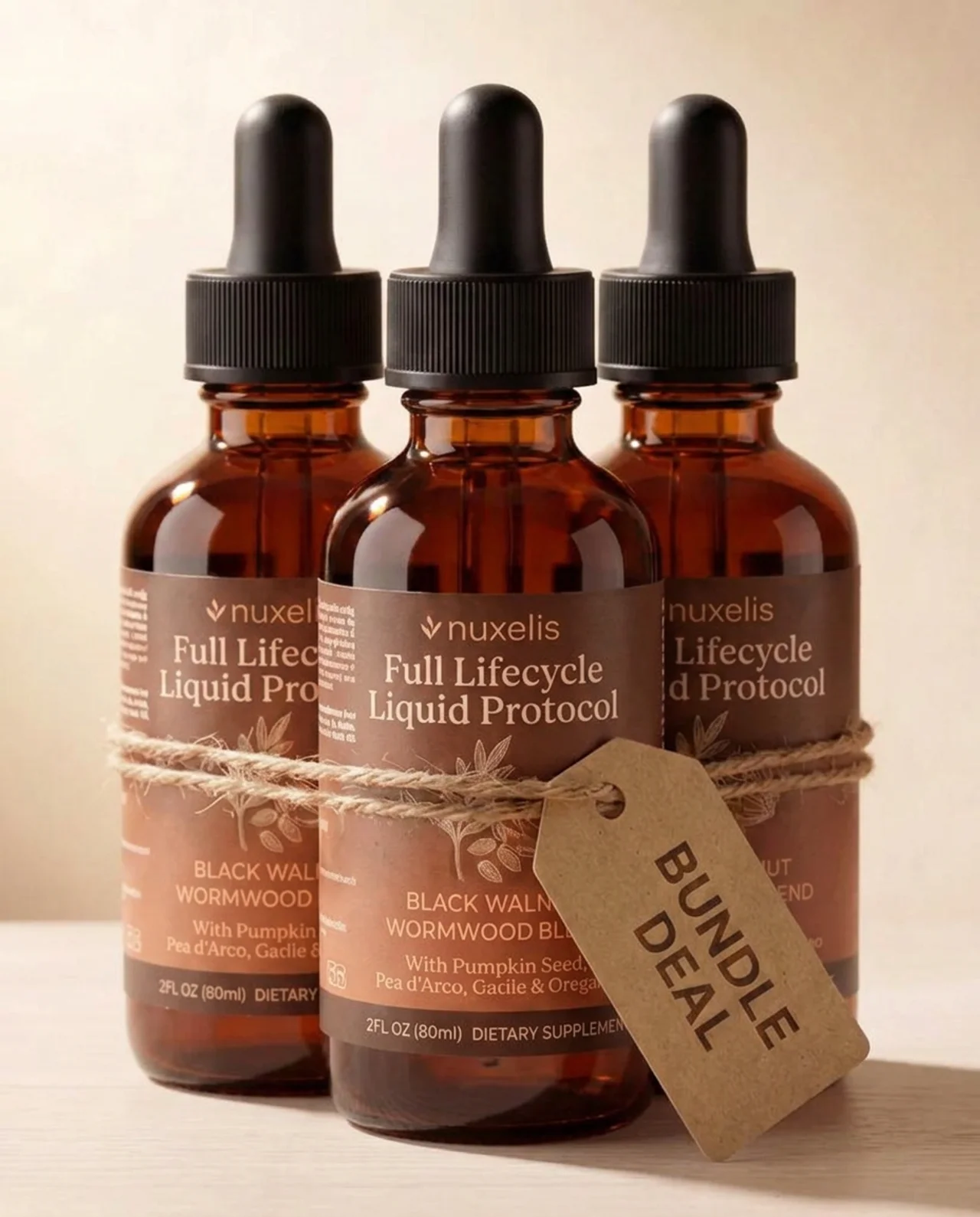
ParaCycle is available in three protocol lengths: one month for $59.99, three months for $134.99, and six months for $239.99.
Availability follows the manufacturing process. Cold-pressing runs more slowly, each batch produces less inventory, and preserving the Eugenol fraction limits how quickly another production cycle can be completed.
Small batches move quickly.
Inventory moves quickly because the cold-pressed batches are small. This is not manufactured urgency. It is the direct consequence of choosing a process that protects the compound inside the finished formula instead of maximizing output.
Choose the Protocol Length That Fits Your Routine
3-Month Protocol
Three months for the full-lifecycle protocol.
Choose 3 Months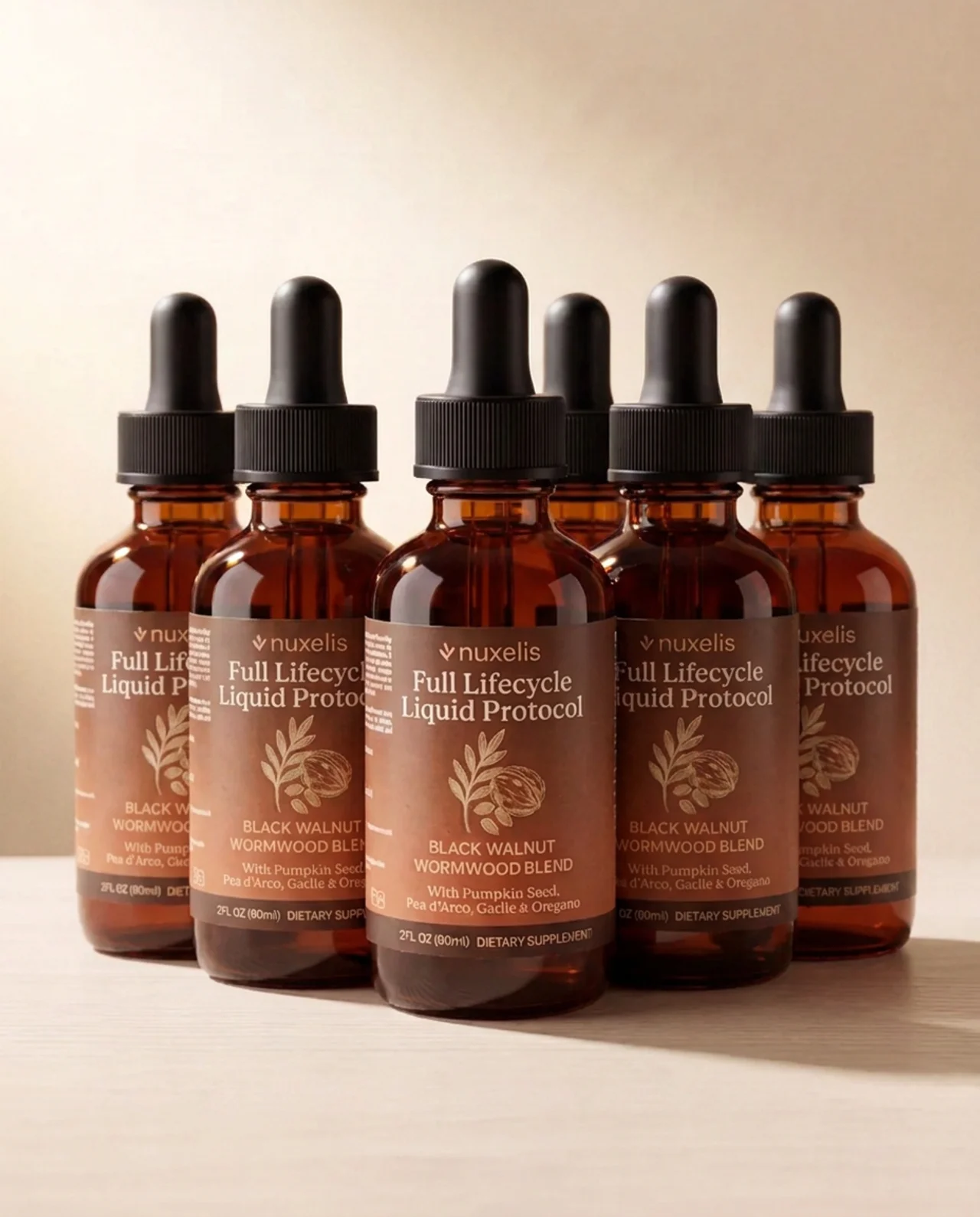
6-Month Protocol
Six months for the longest routine and maximum savings.
Choose 6 Months
90-Day Empty-Bottle Money-Back Guarantee
The guarantee includes an empty bottle because the intended reader has already paid for prescriptions, capsules, tinctures, and cleanse kits that produced only temporary relief. The protocol can be evaluated without asking the buyer to trust another promise blindly.
You have heard mechanism claims before. Here is why this one is different.
This argument does not depend on claiming that one cleanse is stronger than another. It begins with a physical barrier, identifies the chemical property required to interact with that barrier, explains why standard manufacturing can remove the relevant compound, and connects the delivery method to a routine designed for consistency. Repeating the same adult-stage strategy means accepting the same structural limitation again.
Check Current Availability